Ultrasound Speech Therapy
See What Your Tongue Is Doing
Many speech sounds are difficult to correct because the tongue moves inside the mouth, where it cannot normally be seen.
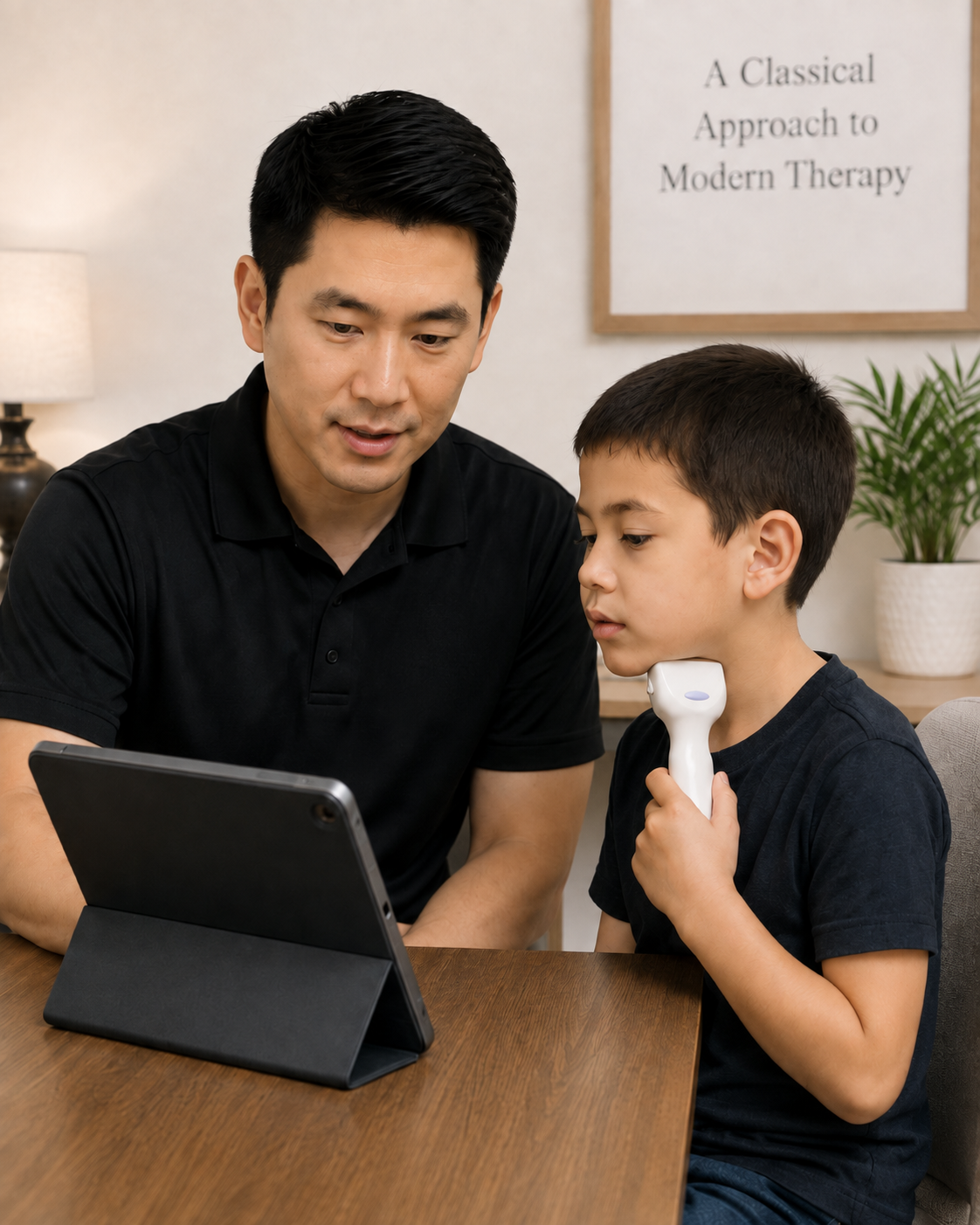
Heritage Speech and Sound offers ultrasound visual biofeedback during speech therapy. A small ultrasound probe is placed beneath the chin, allowing the client to view a real-time image of the tongue while practicing speech sounds.
How It Helps
Ultrasound gives clients immediate visual feedback about tongue shape and movement. It may help them better understand instructions, experiment with new tongue positions, and develop greater control of difficult speech sounds.
This technology may be especially helpful for:
Persistent /r/ errors
Lateralized sounds, such as a lateral lisp
Other speech sound difficulties involving precise tongue placement
Accent modification for adults seeking greater clarity or flexibility
Ultrasound is used alongside traditional speech therapy techniques and is incorporated only when clinically appropriate.
What to Expect
Ultrasound speech therapy is noninvasive and does not use radiation. The probe remains outside the mouth and is held gently beneath the chin while the client speaks.
Not every client needs ultrasound, and it does not guarantee a particular result. Its use depends on the client’s needs, treatment goals, and response to visual feedback.
Pricing
There is currently no additional charge for ultrasound biofeedback. Evaluations and therapy sessions are offered at the same rates as other speech-language services.
Is Ultrasound Right for You or Your Child?
A consultation or evaluation can help determine whether ultrasound visual biofeedback may be useful.